Tuesday, May 21, 2019

Across the Stage


“He doesn’t fit any more,” my wife said, just weeks before our eldest child's college graduation.

“Oh Boy,” she's getting emotional, I thought.

When he was turning two years old we bought him a room set with a pair of trundle beds.  His sister was on the way and we needed the crib.

Now twenty years later a new bed was moving in.

"Why now?" I asked, not seeing the need for anything new in the child’s bedroom which is hermetically sealed between visits. 

"Are we renting it out?

"He doesn't fit in the bed," my wife claimed.  
"His feet hang over the edge."

"He doesn't need to fit in that room anymore," I said, wishing immediately that I could take it back.

There are books and blogs and blather on the moment your child exits the house for college.  We'd been warned about the earthquake of the emptying house.  But now with an empty nest I realize when they go to college they don't go anywhere.  

The calls, the Facetimes, the pictures.  Through technology I feel as if I know more about them now than I did during the 100-Years War that was high school when they lived in my house.  It was a series of Spy versus Spy operations where they hid the alcohol, changed their Instagram names, and spoke in tongues as if they were the world's first teenagers.

Later that day I heard my son’s voice coming through my wife's phone, so I came running.  He was in between classes, all I could see on the Facetime was sky, then grass, then sky, as he swung the phone to and fro.  She told him that the trundles were going and the next time he is in town he’ll have a real “big boy” bed.  

He stammered.

I knew it.  The emotion was getting to him.  Just weeks from college graduation and here she is cutting this final link to his childhood.
He caught himself and said, “You may want to check the trundle.”

One trundle bed had a mattress inside of it, but for some reason we never got a second one.

“What’s in there?” she asked.

I sprinted to his room, sure to discover some treasure, maybe a high school diary or a note to his parents, or things he saved that I never knew.

I yanked open the trundle to a cacophony of clanging bottles.  A secret stash of the world’s worst tasting vodka:  Berri Acai, Orange Sherbert, Absolut Lime, Stoli Razberi.

They had used my son's second trundle bed as a bottle depository during high school for illicit empties?

The drawer where my son’s small fingers first climbed into bed, where we read him his first books, where he went from diapers to underwear, was filled with flavor combinations that could only appeal to the palate of a high school junior.

Those sticky marks on the little wood handles weren't childhood residue, the remnants of a lollipop gone awry, but the spillage of a shot of Peach Stoli?

What you know when they go off to college is that they will return at some predictable interval for holidays and other regularly scheduled events.

But without the school calendar to dictate what can we expect?

At what point do the tables turn and we are visiting him because we have the free time and his store of precious PTO days doesn’t allow?

Like a dial that keeps clicking forward the channel is now tuned to post-collegiate life, a line-up we do not recognize.

There were few tears this weekend, lots of planning and logistics, but then on the field after the ceremony he ran into one of his first friends from the first week of school.  They hugged and said goodbye.  

She is spending the summer in Philadelphia, he is off to New York.

"When will I see you again," she asked.  He stood dumbstruck.  

"I don't know."

That's the difference between school and post-school.  The calendar is still the calendar, there is still New Years, 4th of July and Thanksgiving.  But where will you be at those times?  What do you do in a world where the Library, the coffee shop, or a living room couch are no longer logical landmarks to find your friends?

I have written him letters at every imaginable rite of passage worrying that my days of fatherhood were numbered.  Now as he walks across another stage I have no list of things to tell him.  Except to find those times and those places for those people.  The ones who were always just there, the ones you didn't need to seek out because you'd bump into them without trying.  In a Post-Collegiate world that's the biggest transition, you need to try harder to keep those people close.

So we've got a big comfy bed if you need it.  

And it doesn't rattle.


Saturday, March 30, 2019

From Tel Aviv to Abu Dhabi


Why do they go to Israel?

It's a question we keep coming back to with a generation more than seventy years removed from the end of WWII and the birth of this Nation.

In order to study in Israel they need to navigate a few things that make it different than studying in Barcelona or Florence.

Back on campus they have professors who  choose not to write recommendations because of their blind hatred for a place they've never been.  And even if they do write it, a student wonders what that professor thinks of them just for asking.

They arrive in Israel and the first thing they see is the bomb shelter.

The dorms have windows that barely let in the morning light.

And then the bombs come while they are dining in a restaurant.  And the American students marvel how the the Israeli's rush back to their tables, after the all-clear is given, but before the entrees get cold.

When my generation applied for visits to Israel, nobody noticed:  "Sure, go work on a Kibbutz, learn the language, float in the Dead Sea."

I wish those pro-BDS professors could hear the cabbie taking me from Tel Aviv to Jerusalem as he recommends the shops in a small village just off the highway.  I wish they could hear him explain that Abu Ghosh is an Arab village, “but they don’t attack us and never get involved in terrorism, so we thank them by going to their restaurants.  It’s not kosher, but it’s good.”

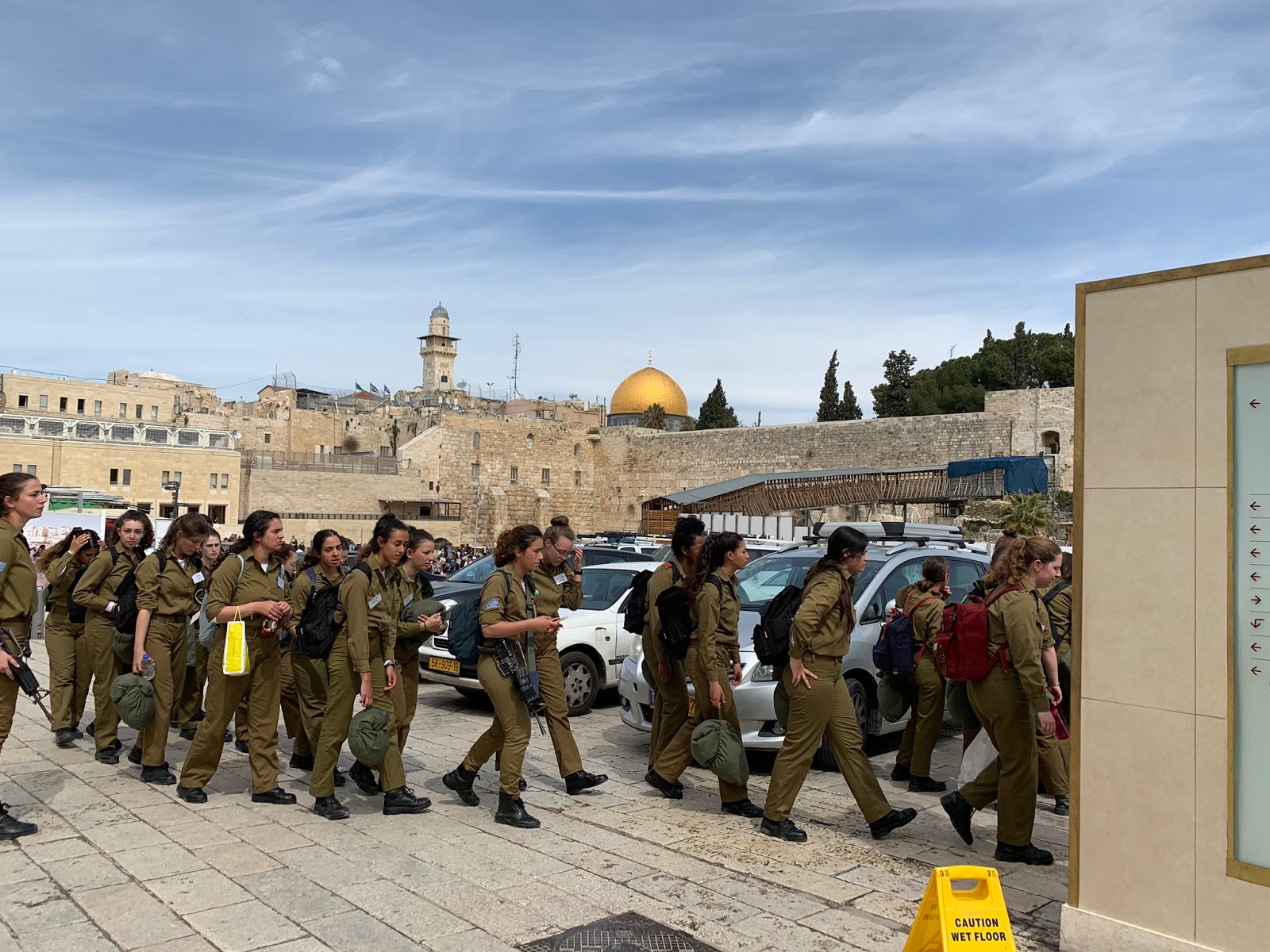
Our children love the nightlife even though the clubs require them to file through metal detectors and leave their bags at home.  They love it’s proximity to Europe even though their visits take more planning as they navigate the airport screenings and delays.  They love the soldiers they meet who carry machine guns not fake IDs.


In Abu Dhabi the country is so new that the Presidential Palace opened for tours the week we arrive.  The Grand Mosque is 10 years old and spotless.  The whole place is spotless. They discovered oil in 1958 and since then they have been rich until the price of oil dropped.  A billion dollars to build the mosque, a billion for the Abu Dhabi Louvre, and free housing, health care and education for all its citizens and suddenly it feels clean and neat, but not so wealthy.  

When people ask the Crown Prince what we can do, he tells them to “spend money.”

Everyone has a job, many of them cleaning streets, keeping the mother of pearl that is inlaid into the Mosque walls, gleaming.

You get the sense that the country's motto is “build it and they will come,” and we arrive as they wait to see if it pans out.


Israel and the United Arab Emirates are both ancient places and works in progress.

The existential crisis for Abu Dhabi is whether people will come visit this desert oasis, half a day away from the Eastern US to learn its history, eat its dates, stay in its hotels and drink its water, infused with gold for $50 a bottle.  

Israel’s crisis is a daily multi-front battle against their Arab neighbors, historic anti-Semitism and a BDS movement rooted in biblical hatred that gives every other regime in the world a pass except the one democracy in the Middle East.

At the Special Olympics' World Games athlete Loretta Claiborne rebuts the  rhyme:  "sticks and stones may break my bones but words will never hurt me."

"I've been in fights and I've broken bones, but the only pain that has stuck with me all these years is the pain caused by words," she said. "That's because those words hurt my heart."

The winds of anti-Semitism and anti-Zionism blow strong again, mostly in words that hurt the most.  Members of the US Congress who denounce Israel and Jews, members of the political establishment in the UK who don't hide their anti-Semitism, Jews all over Europe are listening closely to the words that hurt the heart.

Israel's threats first come in words and then they come in bombs from the sky:

“We can’t take chances, we can’t afford mistakes," another cab driver tells me.  "One mistake and we’re all dead,” he said indicating his support for Prime Minister Benjamin Netanyahu.

The final night we climb the dunes to watch the sun set.  Our footprints from the previous night are gone.  Not filled in or blown away or even covered up, they no longer exist.  The imprint we made yesterday shows no sign of life and in a few minutes the place where we stepped will be gone.


Thursday, March 21, 2019

In a Foreign Land: Special Gifts

In a Foreign Land: Special Gifts: In 1971 the US Olympic Committee granted the Special Olympics official approval to use the name “Olympics.” But I want to know who had t...

Wednesday, March 20, 2019

Special Gifts


In 1971 the US Olympic Committee granted the Special Olympics official approval to use the name “Olympics.”

But I want to know who had the foresight to use the word Special.

At first glance special is such a bland word, defined as “better, greater, or otherwise different than what is usual.”

But it's the only way to characterize these Olympic games.

"Special" is the Crown Prince trying to give his welcoming address while an athlete standing to his left stole the show beaming and waving to the crowd after seeing himself projected on the screen.

"Special" is seeing the Crown Prince of a country, where ten years ago families would not have publicly recognized their special needs children, hugging the boy as he continued welcoming 7,500 athletes from 190 countries.

"Special" is the faces of the athletes who could not contain their joy as Tim Shriver told them, “the crowd is applauding you.”

When you watch the regular Olympic games the athletes walk into the arena filming the scene with their phones trying to capture the moment. But at the Special Olympics the athletes carry no phones because they are living the moment.

"Special" is the fact that the United Arab Emirates does not recognize the State of Israel, but there we were watching the Israeli teams walk across the stage, because things like diplomatic relations don’t matter on these courts.

"Special" is the fact that it looked like any other sports tournament you’ve taken your child to, but there are differences:  Here the athletes leap into the air when they score and help their opponents to their feet when they fall, and apologize after committing a foul.

As an Israeli basketball team prepared to battle the US team I asked one of the referees how close they call the fouls like double dribbling and traveling, transgressions rarely called in today’s NBA.

“I watch them during the first few minutes of the game,” the ref tells me. “I look at their ability level. And the next time down the court, if they are double dribbling and I know they can do better, I call it. But if it’s the best they can do, I let it slide.”

Early in the game the ref calls a foul, and then listens to the athlete's plea.  How do you know this is Special?  Because the referee hugs the young athlete who buries his face in the zebra's shirt and says he is sorry.

The Special Olympics logo is based on a sculpture called “Joy and Happiness to all the Children of the World,” and I suppose that captures the mood as well as anything.  There is joy on those courts and in those eyes.  Here the happiness quotient is so much higher.  It can’t be quantified but you see it after each basket is made, each gymnastics routine is completed, each lap is run.  The parents are as happy as the athlete, cheering not just for their children to succeed in their event, but because they are winning at living.

Two hours outside of Abu Dhabi my daughter is trying to capture the desert with an iPhone.  "These pictures won't do it justice," she complains.  And that’s how I feel after witnessing these games.  Words fail.  But boy, were they special.


Sunday, November 11, 2018

Standing in Line after Pittsburgh


Sometimes you stand in line to get somewhere.

Sometimes it’s the destination.                   

Coming up from the Metro escalator at Cleveland Park I could hear the sound of people sighing.  The sight of the line stretching out from the synagogue and down Porter Street was daunting. 

But it was dark and the trees obscured the street lamps and like a long tunnel where you know there’s an end, but you can’t quite see it, I walked toward the darkness looking for light. 

It was 6:00 o’clock, the Community Service and Solidarity Gathering for Tree of Life Synagogue didn’t start for another 30 minutes.  But even then I knew I wouldn’t get inside.
 
I walked past hundreds of people all waiting, talking, wondering if Adas Israel was at capacity.  But more amazing were the hundreds that came afterward.  The ones who showed up at the end of this half mile long line.  After the service had begun knowing full well they would never get in.  But they kept coming.  And coming.

Even after the service started and their faces lit up blue from watching the scene on a live stream, they kept coming.

Everyone’s phone seemed to have a different signal, some a few minutes ahead others just a few words behind.  But nobody left.  Everybody listened, huddling close to watch.

The week continued apace until there was #showupforShabbat.

We arrived at the 6th and I synagogue thirty minutes early.  We walked past the front door and the security guards and began following a line of people that seemed to stretch barely down the street.

It was raining a bit and umbrellas obscured our view as we continued walking.  We thought we had reached the end, but it was a street corner that turned into an alley that turned into a dead end and then wrapped through a parking lot and back again. 

We parked ourselves at the end of the line and waited along with everyone else.

My wife had a hood to protect her from the rain, and a young man (late 20’s) behind us asked if I’d like to share his umbrella.

The line was young, white and black, some Kippot, some bare.  Most were not on their phones, they were talking with the people around them.  At first they talked about whether they would get in, when might the rain stop. 

But soon it turned to, “Where are you from?”  “Have you been here before?”

There was no talk of politics, no discussions about Election Day because nobody seemed to know each other and nobody wanted to assume.

Again, it was a group of random people waiting in a line to get to a place they would likely never see.  But even on this rainy night, they were content to stand and wait and talk.

The rain came harder.  Some people walked to the front of the line and then came back to report their findings. A rumor spread that a second service might open up at 7:30 when the first was over. 

Even when it was confirmed that the room was full, nobody left.  In the patter of the rain, the rumble of a night in Chinatown, hundreds of people stood together sharing umbrellas and stories with no agenda.

In his famous commencement address, called “This is Water,” David Foster Wallace talks about the petty frustrations of waiting in line and how we can use this time more effectively.

“The point is that petty, frustrating crap like this is exactly where the work of choosing comes in. Because the traffic jams and crowded aisles and long checkout lines give me time to think, and if I don't make a conscious decision about how to think and what to pay attention to, I'm going to be pissed and miserable every time I have to food shop, because my natural default-setting is the certainty that situations like this are really all about me

And so for the second time in a week a service came and went without a whisper of disappointment or complaint.  It was time to go and we walked toward the overlit streets from our bunker in an alley behind a synagogue from a group of people whose names we’d never know.

I never made it in.  But I was there.

What I found in those lines was exactly what I came for. 

The camaraderie and community that one needs in a time of crisis.  The generosity of a young man from Venezuela who offered to share his umbrella.   The kindness of strangers who lent someone a tissue from their purse, a Tylenol from their pocket, a tip for where to eat in the neighborhood.

Wednesday, August 29, 2018

Final Move: Dads on Floors Doing Projects


The fan.  
The shoe rack.  
Anything tall.

These are the three pillars of a father's last lesson to his children.  These are the jobs fathers are called upon to handle during college move in.  These are, in fact, the only times fathers are even mentioned during the final months at home.

As children begin their flight from the nest we want to stuff every ounce of common sense and life lesson into them from how to fix a running toilet, to what we mean by "after tax dollars."  We hope to impart wisdom about goodness, hard work and how much money they would save if they didn't go to Starbucks every day.

But instead we are relegated to jobs deemed least "in the way."  

The dorm hallway is littered with cardboard boxes, FedEx tags, empty food containers and sweating fathers, spread eagle trying to decipher the pictures on the instructions for the Seville Classics 3-Tier Resin Slat Utility Shoe Rack, espresso color.  The instruction wording and odd arrow insertions would stump a WWII code breaker until we are rescued by a YouTube video that surreptitiously circulates among the men.

Regardless of whether it's the well-appointed Freshman dorm room.


The functional Junior year apartment.


 Or the Sh*thole senior house, the
conversations are the same.

"Mom, how does this picture look?"
"Mom, do I need to hang this dress/shirt/jacket?"
"Mom, did we pack (fill in the blank)?"
"Dad, did you pick up lunch yet?"

At the far end of a teeming dorm hallway I pass a lounge on my way to pick up bottles of water.  A television hangs from the wall projecting a hunting show on the Outdoor Channel.  Scattered, one seat apart, on the fading couches is a smattering of tired-looking dads examining their cell phones.

They nod as I pass, a knowing recognition of the purgatory to which we've been relegated.  

We are not our father's father.  We were a new generation of dad that left the office early to show up at the recital and the softball game, we coached the soccer team and cried at camp drop-off as we reached for the unattainable work/life balance.  So when the child walks out that door for the final time we hope she sheds a tear for dear old dad, but she'll ask mom where they packed the Kleenex.  

A few years back there was a series of articles about the "default" parent.  As one article noted, the default parent usually has a uterus.  So when my wife was on a trip to Russia last year I called the kids (texted) and asked them for this one week, to let me be the default parent.  Let me be the one with the answers.

The questions started early the first morning:

"I'm out of money," my middle child texted.
"It's the 18th of the month, that's bad planning," I told her in a warm fatherly warning.
"I'm OUT OF MONEY," came the next exchange.
"I heard you the first time, you've got 12 days until next month's allowance comes."
"That's not the way it works."
"Huh?"
"When I run out of money mom sends me more."
"I'm in charge now."
"This is why we don't call you."

When I come back with the lunch orders I am doused in criticism that gluten-free means NO croutons, the dressing isn't on the side and "did you really get sushi from a food court?"

Amid the small talk with a neighbor in the hallway I ask the parents if they are coming back for homecoming.  They go quiet.  Later I hear the daughter whisper that her mother can't come that weekend so they didn't even bother telling the father.

But when they need height, "Can you put this suitcase on top of the closet" or brawn, "Can you open the package and take the boxes to the end of the hallway," I get the call.

It isn't so bad really, because I've learned, as we take this final child off to college, that it's better to get questions where I actually might have an answer rather than being peppered on topics where I have no expertise.

Because in fact I don't know where she packed her Sofi shorts, I don't know why the body pillow seems deflated and I don't know where to pick up the mailbox key.

I can, however, reach the top shelf, I know the difference between AA and AAA batteries and I hope to G-d that her fan doesn't come crashing down on her, because I have extra parts and the video didn't tell me where they go.

Friday, June 22, 2018

Roxy 2005-2018

Roxy wasn’t the dog
Who cared for other pets,
She didn’t like the lake
Or even getting wet.

But Jill she loved and followed
Around the house and back,
Always by her side
Hoping for a snack.


When I’d come home sometimes
And couldn’t find my wife,
I’d call for our dear dog
To lead me to my life.


The day I brought her home
The kids were so surprised,
They knew I'd said “No Pets”
(‘Cause I knew then, dogs die.)

Most nights when the lights were out,
With Lulu deeply snoring,
Roxy would leave our bed
And sleep alone til morning.

But sometimes late at night
When I felt a little blue,
I’d go off to see her
And ask, “So how are you?”

At some point in the darkness
Her little eyes would close,
And I’d pet her golden hair
As she began to dose.

Yes somewhere in the night
As I pet her fluffy fur,
Roxy made a noise
That sounded like a purr.

And for a moment we connected,
The dreaming dog and me,
Then I’d go off to bed
Or maybe just to pee.

But now my late night partner
Has crossed to the other side,
When I go off to find her
Tears just blur my eye.


And in the foggy mist
Of a late night walk about,
I wish just once to hear,
That little song eke out.

From the dog I didn’t want,
The girl named Roxy Roo,
Who lived 13 great years
Until the children grew.

I wish that I'd been wrong
That nothing lasts forever,
Sometimes we fall in love
It is life’s only treasure.