Sunday, August 14, 2016

Land of Ice and Fire

We left Washington worrying about Trump eruptions, ISIS movements and warming temperatures. 

In Reykjavik they worry about volcanic eruptions, tectonic plates and a melting ice cap. 

It is a place that knows its future lies in its past.  Its strength in its people.  Its economy in its land.

In 2008 the economy was destroyed by men in suits. 

In 2010 relief came in the form of a volcano that disrupted air travel across Europe and put Iceland back on the map.

When the economy was tanking it was revived by nature.  They went from spreadsheets and balance sheets to ice sheets and Geysers, Blue Lagoons, Volcanoes and Waterfalls.

Tourism is up 3 fold.

The 320,000 people who call themselves Icelanders are proud and protective of their small island.

They often brag about how they are the best at this or the most at that, and then with a chuckle add, “per capita.”

Most Nobel Prize winners, per capita (1), highest rate of golf courses per capita (66), happiest population per capita (98%)

In the years leading up to the financial crisis the Iceland economy was driven by access to international credit markets.  When the crisis hit all three main Icelandic banks went belly up.

Iceland had enough of the rest of the world.

Iceland's energy doesn't come from the Middle East, it comes from falling water, heat from the earth, the force of the wind.

It is an extended family with one jail and few tenants. 


“When there is a crime they put the security pictures up on Facebook and someone says, ‘Hey that’s Einer’ and the police go get them,” our guide said.

Top punishment is 12 years in jail for murder, with good behavior you could be out in four.

“Cheaper than divorce,” they joke.  But it's unlikely with a murder rate 20x lower than the world average and few people marry with two thirds of babies being born out of wedlock.


The landscape is so reminiscent of the moon that NASA sent Apollo astronauts there in the 60's to train.  When the creators of Game of Thrones needed a place that looked untouched by man in an imaginary time, they chose Iceland.

They are a happy lot brought up on fear of elves and other previously unscary things.  Christmas is characterized by the story of Grýla, an Ogress, part troll/part animal, who, in the lead up to Christmas, comes down from the mountains in search of naughty children to boil in her cauldron.

Iceland’s story is not of immigrants.  It is a land of similarly situated people who care and watch out for each other. 

Their happiness rating has always been near the top of any industrialized country.  A fact that didn't change even as the country pushed through financial chaos.

Icelanders don't fear Vikings or gun violence, its bankers and volcanoes that can bring them down.

Icelanders know they can survive with what they have within their borders.  They have no standing army, they don't share a border, most have never been to Greenland, their closest neighbor.

“What will you do if Donald Trump wins,” the cabbie asks one of my children on the way to the airport.

“Move to Iceland,” she replied.

The cabbie laughs and said:  “That’s what everyone tells me.”


Thursday, June 16, 2016

Measuring Adulthood


Someone declared that turning 18 makes you an adult.

I don’t know who that was, but I’m pretty sure they didn't have a daughter.


You can now vote.  Go to war.  Buy lottery tickets.  Legally marry.   

At 18 the world calls you an adult, but you have been this way since about the age of three.

Always an old soul.  Always intuitive and perceptive.  Always aware.

And while your 18th birthday is the headline, it is also the age of my business career, which started the week you were born.

It is no coincidence. 

When a young couple finds itself pregnant with the first child it's like being caught in a Tsunami that tumbles and tosses you until you land hard on the beach, a baby in your arms at three in the morning, the hum of a lactating machine in the background, the father fills a journal with out-sized emotions as if he were the first person in the history of the world to become a parent.

Pregnancy with the second child brings different emotions.  More fear than the first time but without the same new-car smell excitement.  Instead of a rolling thrill ride, it is a train coming down the track and it's gonna run over whatever normalcy you've built into your life.

So sometime in late 1997 we knew you were coming.  Your brother just past his first birthday when we learned you were percolating.

The Clinton/Lewinsky mess was about to explode and I was still writing for a living when I knew that we'd need more room, a bigger house, a second everything.


I hired a consultant and found a company in New York and transitioned from being a journalist with a degree in English Literature to a CEO with nary an Econ class to his name.

Mommy sat on the hospital floor, holding you swaddled in a blanket co-signing bank documents.  It is the kind of thing you do when you are just starting out, because we were young and figured there was time to make mistakes...if we made any at all.

I couldn’t know then that we would raise venture capital in the summer of 2000 just as the dot com bubble burst.  I couldn’t know that we’d launch our flagship product in New York and Washington in January 2001 just months before both cities were attacked.  I hadn't yet lived through the purchase of a South Korean business where the employees quit en masse to compete.  I hadn't survived September 2008 when my CFO frantically called saying that Lehman Brothers couldn't pay their $75,000 bill from the previous month.

But the company grew, as did you, and I would chide my employees by comparing:  "She's crawling, are we?"

I can recall every up and down of this business, each deal that we won and lost, every business slight, bad month, disgruntled employee, as I lived and died on quarterly financial reports.

I have no similar memory of our time with you.

There must have been bad nights, but we forget, fights and messes we don’t recall, highlighted by happy times captured in photo albums and the cloud.

I am unable to remember what it was like, the daily rhythm of you as a small child.  I remember trips, birthdays, moments, but they don’t tie together.  All I know is we want more of them.

Business is a difficult child, behaving well, then poorly, growing, then going flat.  But when we needed growth we'd buy something, when earnings disappointed, we'd cut.

But not with you. 

There are times we probably wanted to sell you off or you wanted to have us fired, but it doesn't work that way with love.

The bigger the business gets the more it needs me.

The bigger you get, the less you need us.

You and Marketresearch.com were born the same week, but I no longer compare the growth paths or trajectories.  I built a company through acquisition, people were hired and fired, businesses bought and sold, but you outpaced them all. 

No matter how low you think our stock might be you cannot fire us and we cannot let you go, even in a down market, when cash is low and sales are weak.  None of this matters, our currency is love.

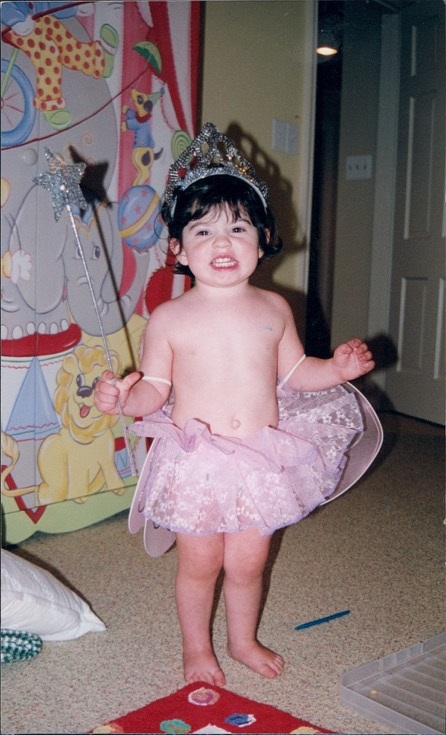
It doesn’t matter if you walk across that stage with a diploma or sign a document that calls you an adult, because you remain in our hearts the girl who earned the name Messy Jessie because you always smelled of vomit, everything you ate ended up in an orange ring around your neck rolls.

You are not a business that needs a budget and cash flow statement to tell us how you are doing.  We watch you move through this world with amazement and we know you are the best investment we ever made.


Monday, February 15, 2016

Forty Nine (49): The Age of Vision


I fumble through the rack of "cheaters" at the local drugstore.

The training wheels of eyeglasses.

Which am I, a 1.0?  1.5?  I can't be a 2.0.

I was sure the blurriness was a brain malfunction.  I'd never worn glasses, never had trouble from near or far.  Even during law school, all throughout the growing up years I was the one who could read the label, the dosage, but no longer.  Now I squint, hold things up to the light, view a menu at a thousand paces.

I then blamed it on bad restaurant lighting.  But soon I was expanding the font on my iPhone, scratching my nose with newsprint, borrowing glasses at lunch time.

I'm still fine from long distance.  I can see a street sign before others, Natalie's time in the 200 Freestyle displayed on a video screen across the pool, the movie details on the outdoor marquee.

But I can't see what's right in front of me.

The second child is in college-preparation mode, her departure coming into focus.  The first child is knee-deep in his new environment: the freedom, the fun, the friends, the future.  His daily hurdles are no longer ours. We can't see them.

But I can see the future.

I see it in the lives of friends.

While our first went off to college, some in our orbit became empty-nesters.  While our parents move to Florida, some of the adults from our childhood fade away.

I see a future where the extended family dynamic changes, holidays when everyone coming to us is not an option, or atleast not the default. School schedules don't jive with life, the amoeba is breaking apart.

But I can't see up close.

I get home early one evening, dinner is done, the girls scamper away, it's 7:15 and there is nothing left to do.  There are hours that I cannot fill.

I see the future in the pace of our lives.

A house goes from bustling to quiet, a calendar empties from full to scattered.  For the past 18 years we squirrel away the moments when we have time to ourselves, to read a book, write a note, watch a show undisturbed.

Now there is more time than things to fill it up.  A weekend morning when no one needs anything from me.

Sundays have morphed.  At first they were exhausting struggles of who would get up with the kids. It moved on to Hebrew School drop off and soccer practices, pick ups from sleepovers, trips for bagels to feed a house full of teenagers who crashed on our basement couches.

Now we go to Yoga class alone and return before the house has stirred. The children wake in time for lunch.  Soon there will be no kids, nothing to rush back for.  Why wait in the Sunday morning line for one bagel?  I can go on Monday instead.

I can read the road signs off in the distance, but I don't recognize the icons on the Waze app in my hand.

Early in Game of Thrones Ned Stark warns that "Winter is Coming."  In the show seasons last for years.  A change of season is upon us.

How do you fill the quiet hours of a February weekend without kids to serve?  I see the future, but I can't quite make out this evening's calendar.

There are no glasses for that.


Friday, December 4, 2015

A New London Christmas


For 17 years I have been making the same trip, same time, same general routine.

I leave from Dulles the Sunday of Thanksgiving, arrive in London Monday morning, go to the office in time for my morning meeting (10:15 back home, 3:15 London time).  

Regular visits to this coffee shop or that bookstore, depending on where I'm staying.  Beers with MRDC'ers, a lunch or dinner with the team, maybe meet a friend.  It never never dulls.

Whether a drink at the Jamaica Wine Bar, pasta at Guiseppe's, a walk amid the Christmas lights on Oxford Street, I never tire of this city, listening to these people, watching.

In the shadow of the Paris attacks there is an unease that has replaced the usual holiday joy.  

Maybe it's no different back home, but riding the Tube here you can sense everyone looking more closely at each other, the bags they are carrying, wondering.  

Someone in our office, apropos of nothing, mentions how his morning train gets backed up at the same point each day, three trains lined up in the same tunnel and they all think the same thing, easy target.

Piccadilly Circus is filled with tourists, lovers surround the Eros Statue which is shrouded in construction materials.  A group of Muslim men walk the area with pamphlets that read, "I am Muslim and I love Christ."  Police stand by, waiting for trouble.

My plane taxis away from the gate, Thanksgiving behind me, another ritual on the horizon.  I exhale, take my Melatonin with a glass of red wine and am asleep before we are in the air.  I am awakened by the woman sitting next to me as she leans in too close, bumping my shoulder and asking why we are flying so low.  The Captain announces we are returning to Washington.

Everyone thinks the same thing.

We land, surrounded by firetrucks, the lights are stark through my rain splattered window on the cold dark night.  It turns out we've hit a bird.  Even in the bleariness of my Melatonin coma I know we are not leaving any time soon.  The rush to the Virgin desk, the luggage, home in time to put the girls to bed and back at the airport at 7 the following morning.

We all want to believe that we are keeping calm and carrying on, but we know it's coming.  Just like the shooting that occurs in California while I'm there, is it Middle East terrorism or just more gun violence?  Either way we are not surprised.  

It has penetrated our thinking.  The 20 minute Tube ride, the 10 minute walk through the train station, the 8 hour flight home, it is there.  They have won this battle.

"So now we're bombing them," the cab driver says to me, referring to the Parliament vote from the previous day.  He is driving me back to Paddington Station early on my last morning.  The Prime Minister said Britain is safer now that the bombing has begun. "What good does it do bombing Syria," he asks, "if they're living next door."


Sunday, August 16, 2015

Changing Rooms


We don’t see gradual.


I looked up one day from our intense preparation for his college departure and realized, he was already gone.

Our parent's generation doesn't seem to understand.  Somehow my departure from the stage wasn't such a cataclysmic event.

When they say "What's the big deal, no one died" I want to shake them and say "you don't understand, I'm just gonna miss him, his presence, the pleasure of his company."

I am trying not to be overly dramatic about the first one leaving the nest, but even the most hard-bitten friends have talked about the emptiness that comes when they do.

“It’s like they cut a hole in your heart,” according to friend I would call, unemotional.

Nothing ages you like your children's passages.  When you send them off to college and realize the clock really is ticking, not on them, but on you.  It forces us to think about all we are in the midst of: Jobs, marriages, friendships, life.

In a much passed-around article, columnist Michael Gerson compared dropping his child off at college with the ending of the universe.  He notes that Cosmologists, who I thought gave facials, “assure us, our sun and all suns will consume their fuel, violently explode and then become cold and dark. Matter itself will evaporate into the void and the universe will become desolate for the rest of time.”

Okay, that’s dramatic, but only a little.

We started preparing early, at the start of senior year, a time everyone told us would be a disaster.  But it wasn’t.  The college application process, the waiting, the pull and push of a teenager trying to escape childhood and parents trying to keep order.

Everything flew generally on time and according to plan.    

And then one night a few weeks ago I headed upstairs to drop the new copy of Sports Illustrated on his bed and found myself in the center of his empty room.  There were lots of days like this, with work, friends, and his own angst changing the household routine, I would leave before he was up and he was out when I went to bed.  His job as an 18-year old waiter conflicted with my schedule as a human.  I could go days without seeing his face. 

I hadn’t been in his room in weeks.  It used to be a regular hang out.  At first to tuck him in, read a book, make sure he was asleep, then make sure he was home.  It was a place where serious talks took place and stories were told in the confidence of darkness.  

And now I stood in a foreign zone, duffle bags splayed open like patients on an operating table, packages of t-shirts and socks, various dorm room requirements, fresh toiletries still in their packaging.  Along the perimeter was his past.  An outer ring of memorabilia that tracked his childhood: 

A baseball glove, a collage of pictures with kids from another neighborhood, stacks of books from various years, Narnia, To Kill a Mockingbird, The Road. Some are dog eared, some un-cracked.  Old bobble heads, long-forgotten ticket stubs, a sea shell, baseball caps of all sizes, a faded art project, a piggy bank stuffed with pennies, a replica of the Forum, an empty Coke bottle from Israel, a deconstructed science project.

A friend of mine calls this a “memory minefield.”  These places that shake us with their history, of a time that no longer exists.  

I look for them in every room, every block of our neighborhood, every memento.  The school, the restaurants, a dent on the couch, things from a different era, when the house had a different rhythm. Gerson said that parenthood is a lesson in humility: “The very best thing about your life is a short stage in someone else’s story.”

Hunting around these corners, preparing myself for these moments, I realized that while I was still on stage, he was already gone.  Off on his new adventure, while I am here with the memories, a minefield for me, a past for him.


Sunday, April 26, 2015

In a Foreign Land: These Four Walls

In a Foreign Land: These Four Walls: The most common narrative in literature is the hero returning home.   But not all homes are equal.  We get more from that first house th...

These Four Walls


The most common narrative in literature is the hero returning home.  

But not all homes are equal.  We get more from that first house than anywhere else.  The memory of that first bedroom, the curve of the living room couch, the light behind a certain fixture.
 
Singer/songwriter/hero Bruce Springsteen said all his songs come out of that place.  "My deepest motivation comes out of the house that I grew up in and the circumstance that were set up there."  He said it's a place "you carry with you forever, no matter where you go or what you become." 

In a new book Michelle Obama said "Everything that I think about and do, is shaped around the life that I lived in that little apartment.” 

So what will our children remember?

The impact of these four walls scrapes at me as they run off, realizing the walls that we built are those that will define them.  Our house, the place we designed with the photos we picked, the drapes she chose, the books we stacked, are the ones of their childhood memories.  

Springsteen and Mrs. Obama describe the memory fragments: the smell of the kitchen, the light at the end of a father's cigarette, the sound of a sibling on the other side of a thin wall.

Parenting expert Wendy Mogel tries to assure parents not to mistake "a snapshot taken today with the epic movie of your child's life."  But how do we know what will stick and what will fade?  Will they remember the time I got up and made breakfast or the time I slept in?  Will they recall the time I yelled when I was right or the time I was just having a bad day?

A few weeks ago on Spring Break in a darkened and hip restaurant in South Beach my middle child started to cry without provocation.  It was just the three of us, me, the college-bound eldest and the middle.

She explained the burst of emotion came from the knowledge that with travel, summer, camp and jobs, it was coming to an end.

"This is the last week we'll be in the house together," she said.  "As brother and sister."

And then the day came, their last breakfast around that kitchen island, the scene of so many morning comments, passed forks in silence, shared muffins, stolen last pieces of French toast.  The only fireworks were in my heart as he gnawed at a bagel and she measured out gluten-free granola into her yogurt. On their first day of school there were pictures and new backpacks, sharpened pencils and juice boxes.  Today there was no fanfare, just two adults looking for their car keys, going in separate directions to different schools. 

It will never be like this again I thought, and she articulated.  So much of what has occupied our minds in that home over the past 18 years has been about what they are seeing. No longer are they learning this lesson or that, those days are past, either they saw it or they didn't.  They remembered it or not.  There is still much to learn, but it's too late to change the arc.

Last week the middle child needed to go to the National Archives for a school project.  We drove through rush hour to get in line with the Spring Breakers and when they all ran to see the Declaration of Independence, we viewed some obscure document, took notes and finished.

With time still left in our morning I grabbed her hand as we ran across Constitution Avenue to the National Gallery of Art.  Somewhere below the gallery, between the section that houses the old masters and the moderns is a gift shop, a waterfall and a little cafe.

I hadn't been there in years and so a few wrong turns around a series of 15th century European sculptures until we emerged at the gleaming underground.  There wasn't much food yet and so she got water and I got coffee and we sat for just a moment.  There were mostly old people eating sandwiches out of brown bags, others who worked at the gift shop setting up their stalls.  And next to us a man and women dressed for work drinking coffee and eating Tootsie Pops?

We listened to the conversation, the clack of shoes on the floor, the workers making lunch for the tourists.  And I told her that she won't remember this day, but I hope she will one day know the complete pleasure of having 15 minutes with your daughter and sharing an espresso.

"I always remember this stuff," she assured me. "I have a good memory for this kind of thing."