Thursday, February 15, 2018

51 Feels Like 15


High School, arguably life's worst years for children (and their parents), have always been something of crime scene.  For parents it's an unsolved mystery, endlessly examined for clues with which to guide our children.

But now it's in their past as well.

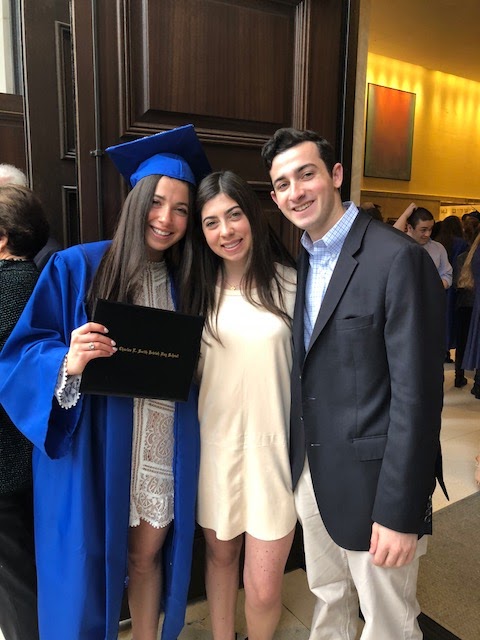
"What if I peaked in high school" the youngest exclaims into her Cheerios one morning, with graduation around the corner.

Those 4 short years imprint so much on our psyche, from the fear of Freshman year, the false sense of being a Sophomore, the suffering of Junior year and knowing that "this counts" and then the waiting, oh the waiting, of Senior year.

Some of my strongest memories of songs, movies, concerts, tastes and smells are from those 4 short years that make up nary seven percent of my life.  

Yet every time we hear about a child not getting invited, a friend of theirs who ends up sick in the toilet, or a car that comes home with a dented fender, we feel sixteen again.  

When we say we understand how they feel, we really mean it.  But the words sound hollow, even to us.

In the 1984 movie Sixteen Candles Sam is turning 16 but her family forgets as they are caught up in her older sister's wedding, the new in-laws, the arrival of the grandparents and Long Duk Dong.

My birthday does not sneak up on me.  In advance I know what day of the week it will be and which dairy/sugar/gluten free dessert I will splurge on.

Last week my wife asked what I wanted to do.

“For what?” I asked.

There was prom, final swim meets, graduation, and the mass coordination of people, parties and plans.

In January I was back in the classroom.  A week of Executive Education to "think big" as they say in Cambridge.  I walk through the courtyard and up the steps to the cafeteria where I fill my tray.  Standing under the archway I stare out at 20 tables filled with CEOs eating lunch and in rapt conversation on everything from Bitcoin to Blockchain.

I stand there looking for an open spot.  There are jackets and sweaters saving seats.  I slalom through the tables to an empty seat and I ask if it's free.  An open smile welcomes me into the conversation.

High School never ends.


Monday, February 12, 2018

Swimming it All Away


Four o’clock in the morning is a dismal hour for parents of swimmers.

There is the chore of waking yourself, extracting the child from their bed, driving them to the pool in the dark and then trying to balance whether to fall back to sleep in the car or power through. What is harder is sleeping through your alarm, waking at 6:30 am in a panic, only to realize that the child now sets her own alarm, feeds herself and drives alone to the pool.

The question is no longer who, but what drives her?  There is no swim scholarship at the other end of the pool.  No fame, no riches.

None of that matters to her, just the satisfaction of how she feels getting out of the water after a practice or at the end of a race.  

As she wrote in one of her college essays:  “My team has become my family, the pool has become my second home, and the scent of the chlorine has become my new perfume.”

The pool is not always warm and welcoming, but in a world where there is so much communication, so many signals, so much vying for our kids’ attention, so much to do, she finds comfort under water.  

For two hours a day she has no cell phone to grab, no Snapchat streaks to contend with, no videos to like or pictures to share.  No one is calling for her attention except the water, the wall and her now-quiet mind.

There is something about the simplicity of it all that draws her in.  The rules are black and white, like the lines at the bottom of the pool.  There is a start and a stop, a beginning and an end, complete clarity, even under the murky water.

But the times improved and with it the awards and the confidence and it became a part of her.  She was a lot of things, but she was a swimmer first.  Years of leaving parties early on Saturday nights so she could get up early for Sunday practice, coming late and leaving early to endless family vacations, impossibly early mornings all conspired to form the core of who she is.

This is not a story that ends poorly with heartache or injury.  It ends the way high school ends with a final meet, improvements that come in tenths of seconds, tears for what's over, and wonder about what's next.


Monday, November 27, 2017

Outliving the Suburbs, but Not Our Home


At dusk we walk the dogs.

As the house empties the evenings are the biggest change.

There was a time when I would rush home from work to help with the bath, pajamas, teeth-brushing, story-telling and to bed before the adults returned to the kitchen for a dinner of our own.

The routine changed as they learned to feed themselves and made sure the parents stayed away as they covered up on their way to the shower.

And now we come home and the lone remaining child is already upstairs doing things where we have no logical role.  Maybe we can look over a paper or answer high impact questions like: “I'm out of toothpaste.” “Why is it so hot in this house?”  “Is the Wifi broken?”

But other than that we are left to our own devices.  But what are those devices?
I’ve asked several friends whose nests have emptied what they do at night?

Seven o’clock is the new witching hour.

Our only remaining live-in child gets home from swim practice at six thirty, the elaborate meal of a protein, starch and veggie is eaten standing up at the kitchen counter much to my wife’s dismay.  But the child hurries back up to her room for homework, college applications and social connection via social media.

So now what?  It’s seven o’clock.

I used to sneak into my den for a few minutes of work or reading or writing when they were young.  Now I have the time alone, but I don’t want it.

So we walk the dogs down the street, up to the elementary school where they can go off leash to run.

At the school there are parents pushing strollers through the adjacent playground, maybe someone is on a swing, another is catching a child swirling down a slide.

On the blacktop there is a father chasing a bicycle as a little boy with helmet, knee pads and elbow pads wobbles back and forth before straightening his front tire and heading for the safety of the grassy baseball field.

Onto the soccer field we go, a practice of middle schoolers in full swing, a few parents linger along the sidelines.  When the dogs get too close and the snares from the sideline parents too intense, we call for them to come.

These are all scenes we have run through.  We have been on that playground, pushed a bike through that parking lot, anxiously cheered a child from those sidelines.

But now it’s all sidelines.

It’s getting dark and practices need to end, parents trying to get home, children stretching for one more chance at daylight.

A father in the parking lot implores his child to come to the car, as the little boy tries, in vain, to make one final shot on the basketball court before running to the open door.

“We don’t belong here anymore,” I say, as the dogs go into a trot on the way back home.  “The suburbs served their purpose, now it’s time for someone else to be on this street with their kids, their basketball, their dogs and leashes.”

These nightly walks are a trip through our lives, a splendid one at that.  Our kids played on those fields, but now they are gone and we should be too.

“We’re not selling the house,” she says.

“Why not?”

“You can’t sell their childhood while they are in college, they need a place to come home to.”

“We’re not going to be homeless, we’ll move someplace else.  The suburbs are built for families.  We have nothing to rush home to in the evening, our job here is done.”

“The kids need to know they can come home.  To their home, not some house where they stay in a guest bedroom.”

We went from living in a dorm, to an apartment in a city, to the suburbs.  But somewhere after suburbs, but before Florida or a “community”, where do you go? 

A friend of mine, a city dweller, called the suburbs soul-less.  I disagree.  The soul of the suburbs are the family’s that live there.  But when the kids leave the house, a light goes out. 

Had we outlived our suburban purpose?

Thanksgiving comes and everybody rushes home.  The kids love their beds and their bedrooms, their dogs and their place on the couch with unrivaled affection.  Rooms we haven’t entered in months are now filled with people and friends, empty bottles and cups, dented cushions and noise that is music to any parent’s ears.

I get it. 

The children are fiercely defensive of their homestead, their bedrooms, their backyard, their pets.  They want it all hermetically sealed in a place they remember when they were small(er).  We are not meant to live in museums.  They are places to visit, pause and remember. 


But what are we to do between visits?

Wednesday, August 23, 2017

Will the World Forgive?


In America we live in bubbles.

One bubble rolls its eyes every time the President opens his mouth, wondering where the truth lies.

The other bubble stands and cheers every time he pushes a world leader out of the way.

Outside our borders and beyond our walls the world seems to have made up its mind.

Every time I talk with someone from another country they trip over themselves to find a way to bring up the topic of President Trump.  It often begins with: "You didn't vote for him, did you?"

In London they seem mildly embarrassed for us, as if something bad happened to a friend. They mumble something about Brexit, but the tabloids are unforgiving.

At a restaurant in Italy, when they learn you are from America, they launch into a re-telling of some story about Silvio Berlusconi as if to say:  "I understand."

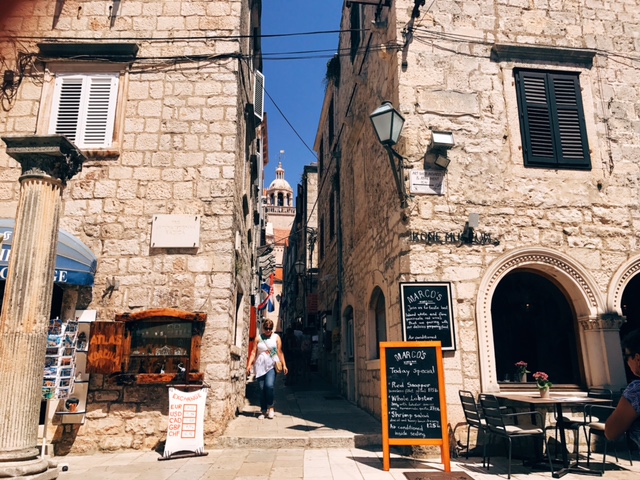
In a cab in Croatia talk turns to politics and Washington and the state of our United States.

As the storm raged in Charlottesville and the President wondered aloud whether the KKK or the anti-KKK protesters were at fault, the cabbie's mood brightened when we told him we were from Washington, DC.

He was kind to us, but must have marveled at our astonishing lack of knowledge about a war that occurred in his backyard during the Clinton Administration.

But he wasn't judging us on that.

"Trump is a joke," he said in an accent that sounded like Vladimir Putin.  "But don't worry, America is still the greatest country in the world."

"Why do you think that?" I asked, "I mean with all that's going on?"

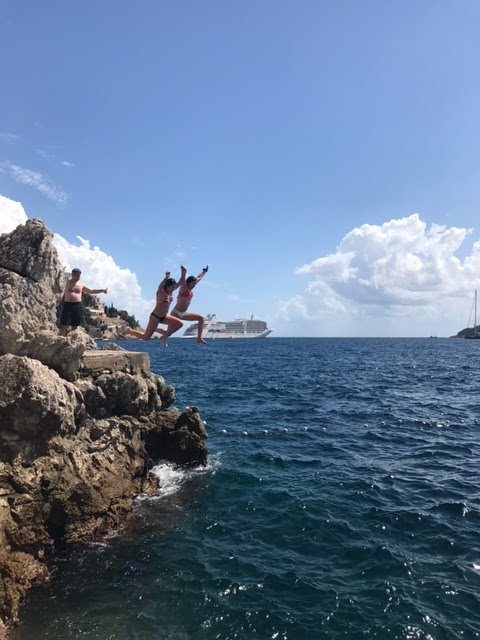
"We learned at an early age that America is the greatest country. The greatest economy and strongest military," he said. "During the war there was an aircraft carrier right out there," he said, pointing to the perfect blue of the Adriatic Sea. "That makes an impression on you."

"And the impression isn't ruined by President Trump?"

"This is a blip," he says. "Trump is not America.  One mistake does not ruin your greatness."

Days later a chef on the island of Hvar is, to me, remarkably fluent in the issues of Trump, North Korea and Hillary's email server.

"So what do you think?" I ask.

"You have a child running your country," he said. "On election night we were watching and couldn't believe it. Lots of countries are making this mistake, but America?"

"So does this make us like everybody else?" I asked.

"People here were laughing at first" he said.  "But now we are worried.  Maybe you can't control him."

Croatia is a long stretch of land, including 1200 islands, just the other side of the Adriatic from Italy.  A beautiful country of people who spend their summers on the coast taking care of tourists and their winters inland making money.

At a small restaurant on a tall narrow side street a family gathers for lunch. The family includes the restaurant owner, his wife and two grown children, a grandchild, two cousins and some employees. They eat a stew of leftovers, drink some wine and smoke cigarettes. They talk and laugh, and talk and laugh, until they are interrupted by a potential customer.

When the customer asks for a table the owner looks at his daughter, both award-winning chefs, they shake their heads. Better to stay closed rather than interrupt the family lunch.

"It's the Mediterranean way," the old man says, before telling his grandson to put his phone away.

On a recent call with a colleague from Hamburg Germany the discussion turned from business.

"Can we talk Trump for a minute?" he asked.

"Do you think America can recover from this?" I ask.

"Well," he said after a long pause. "I come from a country where we too were embarrassed by our leader.  America will be back."

"How do you know?" I ask.

"Here's what I've learned," he said, "the world forgives."

But it doesn't forget.


Thursday, August 10, 2017

Fake News in a Real World: What It Means for Market Research


There is a famous New Yorker cartoon with one dog sitting in front of a desk-top computer telling another dog:  “On the internet, nobody knows you’re a dog.”

It appeared in 1993.

And now 24 years later the problem of internet identity has moved from a punch line to the front lines of business, news, politics and commerce.

The sad truth is that in 2017 on a Google results page, we all look the same.

On the internet we don’t know if a world super power hacked an election, or as President Trump said, it could be “Somebody sitting on their bed that weighs 400 pounds.”

On a Google results page, where many business decisions are made, an unsuspecting consumer doesn’t know if you are a PhD who spent 400 hours analyzing a market or a recent graduate putting together numbers from a press release.

In the world of the New Yorker and dogs trying to pick up cats, it’s humorous.

In a 24-hour news cycle, it’s sobering.

In a business where trustworthy information is the coin of the realm, it’s industry-altering.

Why do we all look alike?

Historically, one way to show you were a reputable company was to brag about your resume, highlighting the top companies you serve.  In this new world you don’t need to really have them as clients; instead, you copy their logos from other websites and post them.

Another way to show you are reputable is to prove your US bona fides.  But instead of having an actual office now all you need is the address of an office share and suddenly you’re in Albany.

Another way to prove trustworthiness is a show of force on LinkedIn.  Now these questionable firms post fake identities and histories with head shots of unsuspecting strangers.

Since 2001 MarketResearch.com has sold information for more than 1,000 publishers from around the world.  We sought out new publishers, new titles and curated them in a way to help make buying expensive industry analysis easier.  Our first tag line was “Helping you find the market research you need,” because we knew that nothing felt worse than buying a $5,000 study and not getting your question answered.

What is relevance in the age of Google?

Relevance used to be the best report that answered your business question.  Now when a reputable publisher comes out with a report, a fake publisher can produce a slim volume with the same title a month later.  When a business user searches Google, the more recent title often rises to the top.   

When there is no apparent distinction between what is inside a report, all you can do is judge a book by its title.

As good data, or hard news, become watered down, client expectations change.  When a news headline turns out to be inaccurate, people begin assuming all news must have something wrong with it.

We face the same challenge in the information space.  We can suggest that a client buy a $5,000 study because it was written by an industry analyst who studied the market for 30 years and is an industry expert.  But too often that same client opts for a less expensive report published by a new firm with no track record.  When asked why the client will use the dangerous phrase:  “Well, good enough, is good enough.”

My response to that client is:  Expect more.  Ask questions.  Don’t rely on a clever title and a well-crafted marketing email.

There is a way to conduct accurate research.  Try reading a study on the US market for packaged goods that was written by a person who never stepped foot in a US grocery store and the difference is painfully obvious.

Fake news and alternative facts, while a problem for our democracy, can be ferreted out by choosing where you get your information. 


But when you need to make informed strategic business decisions, good enough is not good enough. In fact it’s risky. You need accurate information from a reliable source. 

Wednesday, February 15, 2017

Five Oh


No I don’t want to be 21 again.

But I want to remember what it felt like.

Not because it was perfect, but because the farther away from it I get, the more it fades.

Anna Quindlin once wrote :

I did not live in the moment enough.  This is particularly clear now that the moment is gone, captured only in photographs. There is one picture of the three of them, sitting in the grass on a quilt in the shadow of the swing on a summer day, ages 6, 4 and 1. And I wish I could remember what we ate, and what we talked about, and how they sounded, and how they looked when they slept that night.

But I knew this.  I kept a journal and wrote down so much.  But I don’t remember what it was really like.  I’ve tried to stop the clock, but you can’t even catch it.

Life is With People is a study of the culture of the Jewish neighborhoods of Eastern Europe, the Shtetl.  The book attempts, not only to describe life in these communities that no longer exist, but recreate them.  They take the reader through the rhythms and sounds of the week, trying to reconstruct daily life.

The Introduction to the book describes its task this way: 

Like a dance, for which the music and the choreography have never been written down, a great part of any human culture is lost to humanity when the group which has carried it, devotedly, in every word and gesture dispersed, or destroyed, or forsakes the traditional way for ways which are new.
It is the same for every culture and community we have been a part of:  The house we grew up in, the fraternity we lived in, the place our kids called home. Every dinner table has similarities and differences from those before, but none are exactly the same.  

We were taught, inculcated, at 800 Lincoln to learn and live as the Men of the Mu did before us.  That house had a smell and a rhythm that existed while those 50 boys lived there, but when they scattered, it did too.  Just like the culture of the cabin at Camp Walden, the hockey team, or Southfield Lathrup senior high school class, or our house when it was filled with the five of us.  

And once they are gone the culture is only in the memory of the participants.  You can’t recapture it.  When the kids come home it’s not the same as when they lived there, or when I go home or the people from those places get back together at a birthday or a reunion.
New people now live at 20445 Willowick Drive, others walk through the halls of Markley, the apartments and classrooms look the same, but they are different, because the personalities are:  6500 days in that childhood bedroom, 200 nights in that dorm room, 400 mornings in that fraternity house, 15 years when all 3 children lived under that roof.  Those world's cannot be reconstructed.

There is a value in memory.  More certainty there.

The logical steps of growing up, college, work, marriage, kids, more, have ended. 

At 50 there are more choices, but less clarity.  

Thursday, December 29, 2016

Dear Mr. President, Why Now?

I voted for you twice and until this week I would have a 3rd time.

I didn't just vote in those elections, I cheered, I gave money, I had faith.

I know how devastating it must be to find that your successor, is well, your successor and how much of your legacy will get steamrolled.

But you were always the happy one who told us it would be okay and smiled and graciously took the President-elect around the White House and showed us how a President, a mensch, as we would say, should act.

And then in the waning days you decide to take this final swipe.  

The question is not why, but why now?

We overlooked the Iran deal, we overlooked the icy relationship with Netanyahu, we supported you because in the end we needed to trust you. Many of us believe that Israel and our friendship with the US is the only thing that stands between us and a second Holocaust.

And now, after this public denouncement, my Democratic friends are bending over backwards to explain why this isn't so bad, "not unprecedented," they say.  These are writers and editors and opinion makers who we have previously trusted to help balance public opinion in the face of the UN and other institutions that are inherently Anti-Israel if note Anti-Semitic.  With all the problems in the world and all the places that need your attention you throw fuel on this fire?

With a month to go in this job you spend your energies and efforts and thoughts on this?  When I struggle to understand why the only answer, the only reason, the only possible thing that could compel you is the smallness of character that you have managed to avoid in your time in office in a town of small people.

You struck out at the Jews and Israel to make what point?  Do you believe this will really move the process forward?  Do you think this will bring people together, the overriding message of your campaigns and presidency?

The world is attracted right now to political parties and systems where the Jews have traditionally not fared well.

When the world is wrong on Aleppo, it's a tragedy for a city, maybe even for a country.  When you are wrong about Israel, it could mean genocide.

The world is on fire.  In the middle east there is an endless list of problems from Syria, Libya, Iran, Iraq.  In Europe and the US fear of cars slamming into Christmas crowds, the new Administration is taking new and untested positions, and in this environment where the world stage is over-crowded with fascists and nationalist you serve up the world's favorite scapegoat? 

Why now?  Why this?  Why us?